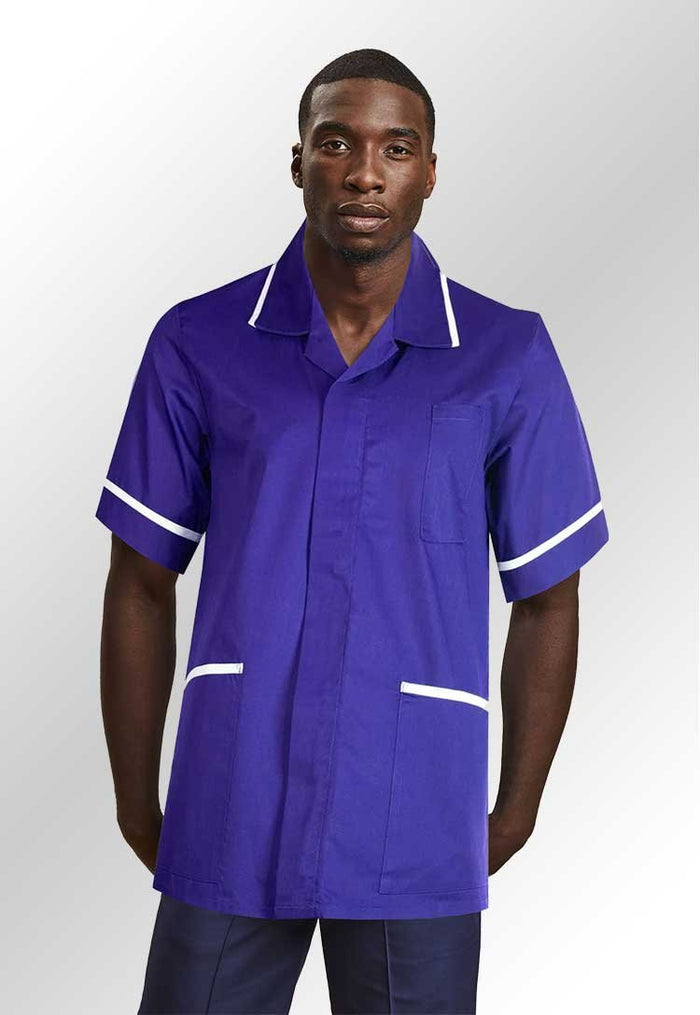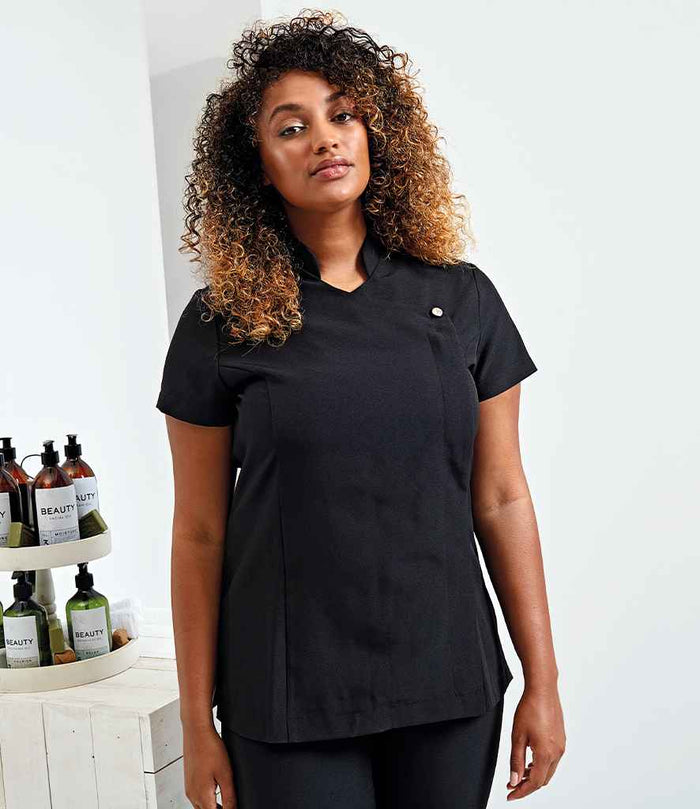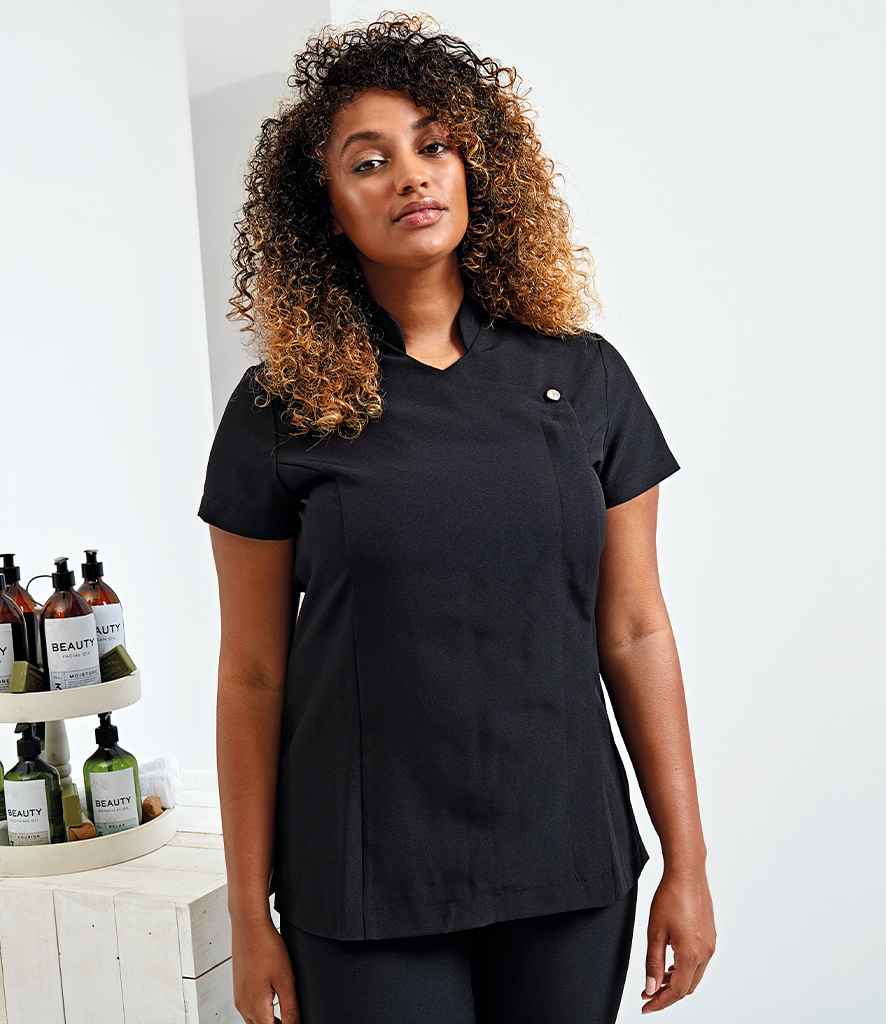
Healthcare uniforms need to work as clothing first and branding second. Comfort, movement, practical storage, laundering and consistent sizing all matter when the garments are being worn through a full working day.
Define the roles you are buying for
Start by separating clinical, care, reception, management and support roles. Different teams may need scrubs, tunics, polos, trousers, layers or a combination of garments. Mapping the roles first makes it easier to create a consistent uniform without forcing every employee into the same style.
Prioritise movement and fit
Healthcare work often involves repeated bending, reaching, sitting and walking. Check the cut of the garment, available stretch, side vents and trouser rise where relevant. A style that looks smart standing still may not be the right choice if it restricts normal movement during work.
Where possible, use a controlled size trial or collect staff measurements before placing a larger team order. Our workwear sizing guide for team orders explains how to record sizes consistently.
Look closely at pockets and practical details
Pocket position and quantity should match the role. Consider what staff actually carry during a shift and whether the garment design makes those items easy to access. Also check fastenings, neckline, sleeve length and whether the garment is intended to be worn alone or layered.
Check fabric and wash-care information
Fabric composition, garment weight and wash instructions should be reviewed product by product. If your organisation has a specific laundering process, confirm the manufacturer's care information before standardising the garment across the team.
Do not assume all scrubs or tunics have the same wash performance simply because they fall into the same product category.
Use colour deliberately
Colour can help create a consistent brand or distinguish departments and roles. If your organisation uses role colours, choose shades that are available across the required styles and sizes and that can be reordered consistently.
Plan branding around the garment
Healthcare uniforms can be embroidered or printed where the garment construction and intended use make that appropriate. Logo size and position should be reviewed against pockets, seams and garment panels before the full order is decorated.
Create a repeat-order specification
Once the range has been approved, record the garment code, colour, sizes, decoration method and logo position. That turns the original order into a repeatable uniform programme for new starters and replacement garments.
Explore our healthcare uniform collection or request a business quote for help selecting healthcare uniforms for your organisation.
Run a controlled wearer trial
For a new range, choose representative wearers across roles and sizes. Ask them to assess movement, temperature, pocket access, trouser fit and comfort through a normal shift. Wash the samples according to the manufacturer's instructions and record the outcome before approving a larger rollout.
Build the procurement record
Keep the approved style code, colour, role, size range, care instructions and branding specification in one controlled document. Add the date approved and any permitted alternative. This gives managers and new locations a reliable basis for ordering and makes it easier to identify where an unapproved substitution has entered the range.
Plan the implementation
Decide whether the team changes at once, by department, by location or through natural replacement. A phased transition can reduce waste, but it needs a clear cut-off so old and new colours do not remain mixed indefinitely.