There is no universal answer
Care organisations often ask whether staff should wear scrubs or tunics. Both can work. The better question is which garment system best fits the role, organisation, laundering process, brand and reorder requirements.
The decision should be made around how employees work rather than around whichever style is currently fashionable.
When scrubs can work well
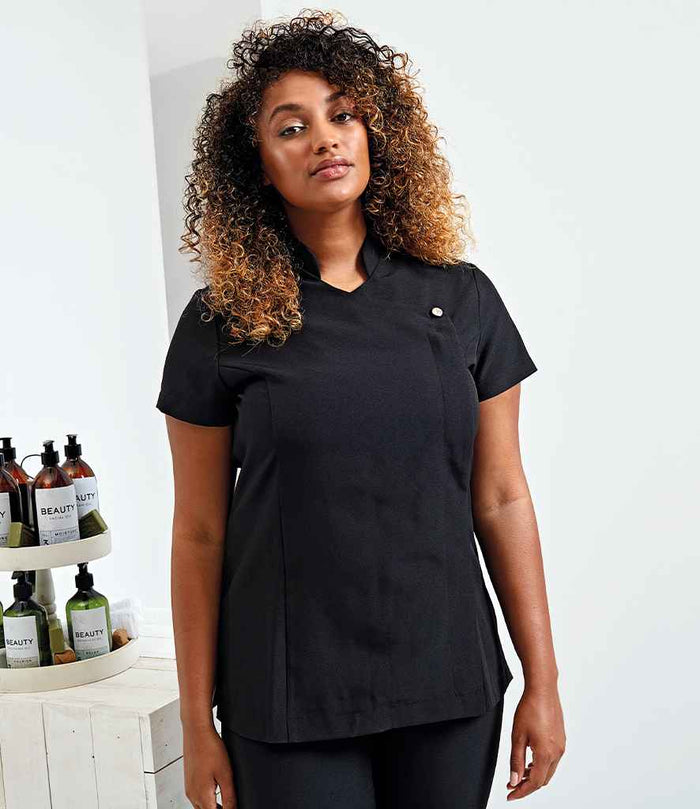
Scrubs provide a simple top-and-trouser format and are available in traditional and modern stretch ranges. They can suit teams that want a coordinated clinical appearance and employees whose work involves regular movement.
When comparing scrub ranges, check fit, fabric composition, stretch, pocket layout, size range, colour availability and the manufacturer's stated laundering instructions.
When tunics can work well
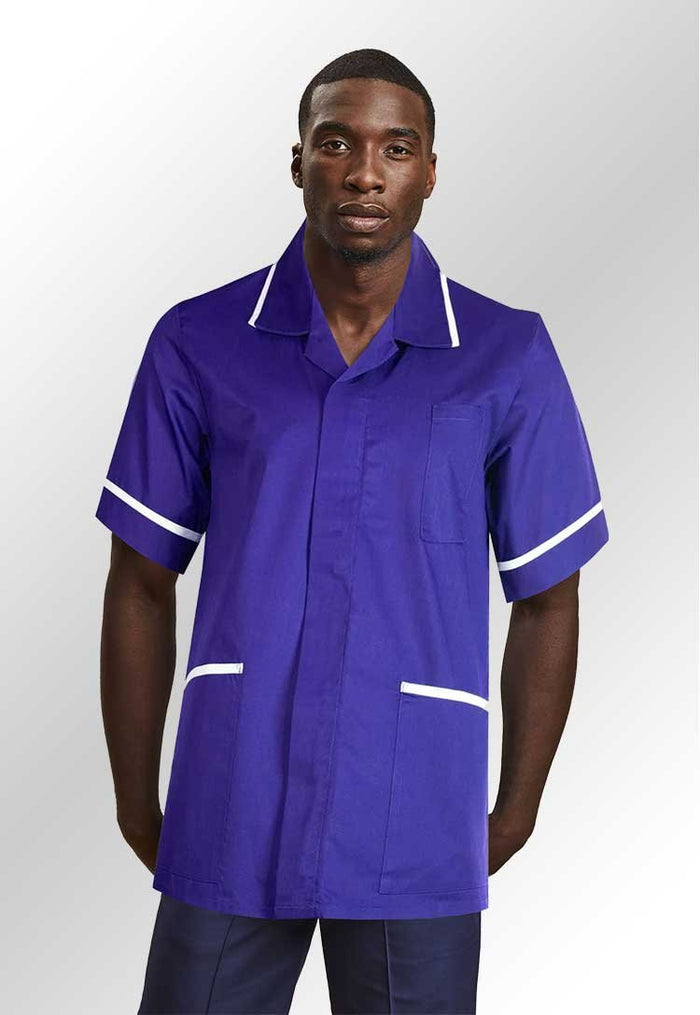
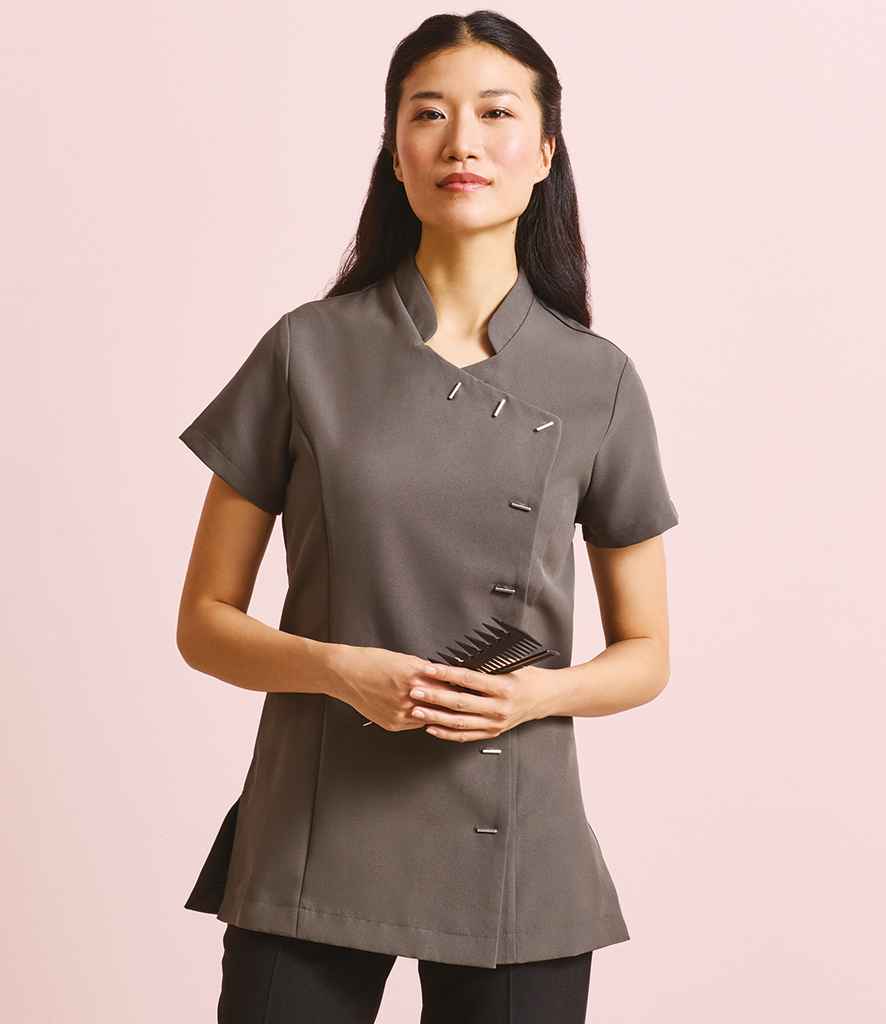
Tunics provide a more structured uniform appearance and are available in multiple styles, trims and colour combinations. They can be useful where a care provider wants strong role identification or an established traditional healthcare look.
As with scrubs, product selection should be based on the actual garment specification rather than the category name alone.
Think about trousers separately
A good top does not automatically make a good complete uniform. Consider trouser fit, waistband, pockets, leg length and movement. If a team uses tunics, the trouser choice may come from a different garment family. If it uses scrubs, decide whether matching sets are important or whether a separate trouser gives a better fit.
Role identification
Both scrubs and tunics can support role colours. Keep the palette controlled and make sure colours remain sufficiently distinct in real conditions. Where exact matching matters, physical samples are preferable to relying on screen colours.
Laundry requirements
Do not assume that one garment type automatically tolerates higher wash temperatures than another. Check the manufacturer's care instructions for every proposed product against the organisation's laundering process.
Branding
Embroidery can create consistency across different garment types. Agree the logo artwork, size, thread colours and placement before rollout. If multiple roles use different colours, confirm the logo remains visible on every shade.
Staff comfort and fit
Uniform acceptance affects how well a range works in practice. Sample representative sizes and ask wearers to assess movement, fit, pockets and comfort over a normal working day. This is particularly valuable if moving from a structured tunic to a stretch scrub, or the other way around.
Reordering
The strongest uniform programme is easy to repeat. Record the approved style code, colour, role, branding and permitted alternatives. Avoid building a range around products that are difficult to identify later.
Can a care provider use both?
Yes. A provider may use scrubs for some clinical roles, tunics or polos for care roles, and different garments for housekeeping, catering or management. Consistency can come from the colour system, embroidery and controlled specification rather than forcing every employee into one garment family.
Review the options with LMU
Love My Uniform carries scrub tops, scrub trousers, tunics and wider healthcare uniform options. For a larger team or an existing range you want to match, request a business quote.