Start with roles, not colours
A care-home colour system works best when it makes the organisation easier to understand. The mistake is to begin by choosing a different colour for every job title. That quickly creates too many products, too many shades and a difficult reorder process.
Begin with the roles that genuinely need to be distinguished, then decide whether colour is the best way to do it.
Create practical role groups
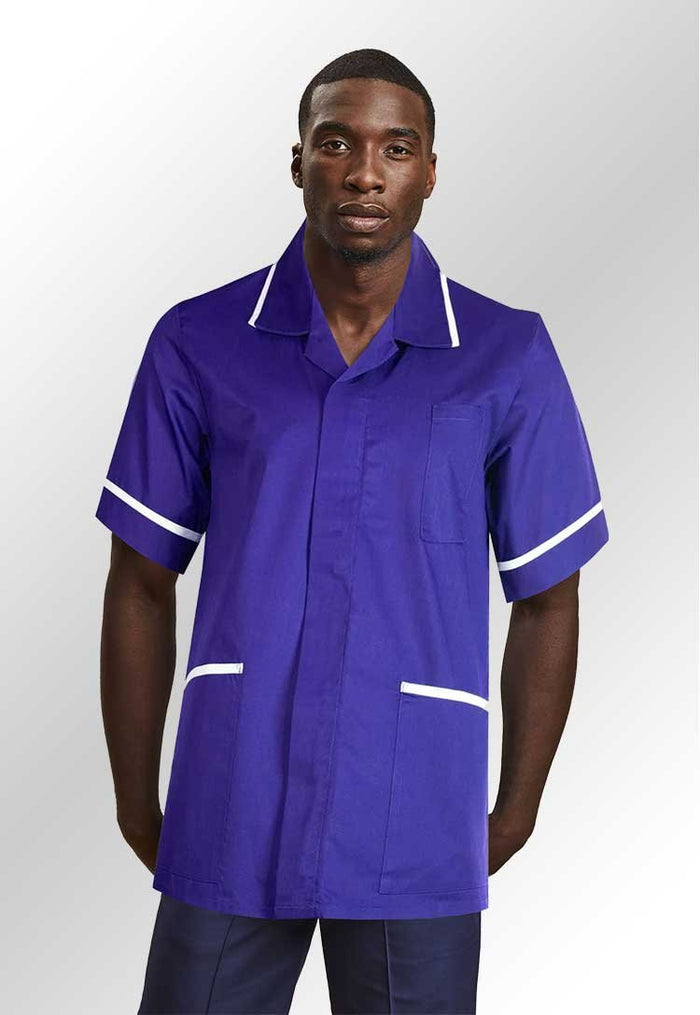
A typical care organisation may have carers, senior carers, nurses, housekeeping, catering, maintenance, reception and management. Not every group needs a unique garment. One controlled garment family can often cover several roles using colour, embroidery or a secondary item to provide distinction.
Limit the number of core colours
Every additional colour adds procurement complexity. It can increase the number of products managers need to remember, make stock substitutions harder and create problems when manufacturers discontinue shades. A smaller controlled palette is generally easier to maintain.
Use contrast deliberately
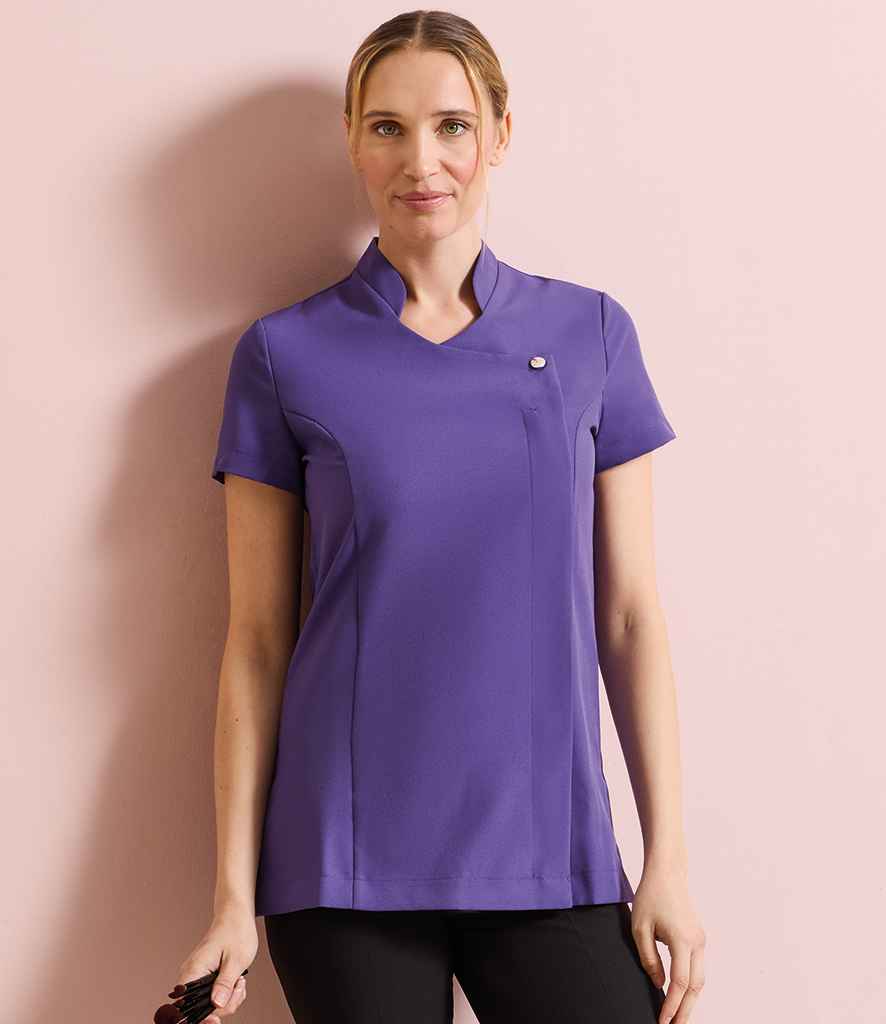
If residents, visitors or colleagues need to distinguish roles quickly, choose colours with enough visual difference. Two similar blues may look distinct on a screen but almost identical in a busy working environment. Where role recognition matters, physical samples are preferable to relying only on digital swatches.
Consider branding alongside role colours
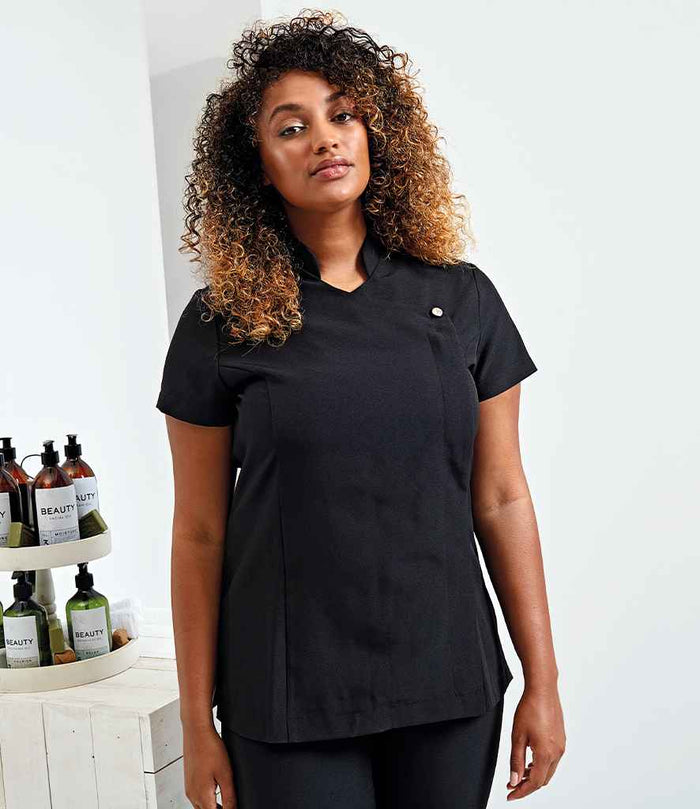
The company logo still needs to work on every garment colour. A logo that is clear on navy may disappear on black, while a dark embroidered logo may need an alternative treatment on darker garments. Set approved thread colours and placement at the same time as the garment palette.
Keep clinical and non-clinical roles coordinated
A consistent uniform programme does not require every employee to wear a tunic or scrub top. Care staff may use tunics, polos or healthcare garments while housekeeping, catering, maintenance and office staff use different garment types. The system can still look coherent when colours, logo application and outer layers are controlled.
Plan for outerwear
Role colours often disappear as soon as staff put on fleeces, soft shells or jackets. Decide whether outer layers need to preserve role identification or whether a common branded outer layer is acceptable. This is particularly relevant for domiciliary care and employees moving between buildings.
Document the approved range
Once the system is agreed, record the approved product code, colour, role, logo position and permitted alternatives. This prevents gradual drift as individual locations make separate purchasing decisions.
Test the system before a full rollout
Where possible, review garments in real working conditions and after laundering. Check whether colours remain distinct, whether the fit works across the team and whether pockets and garment lengths suit the role.
A simple example structure
A provider could use one core tunic or polo family for care roles, a separate clinically appropriate range for nurses where needed, practical tabards or polos for housekeeping, and coordinated businesswear for reception and management. The exact colours should follow the organisation's own operational requirements rather than a generic template.
Need help turning roles into a uniform range?
Love My Uniform can work from your current role structure or existing supplier list. See our care-home uniform approach or request a business quote.