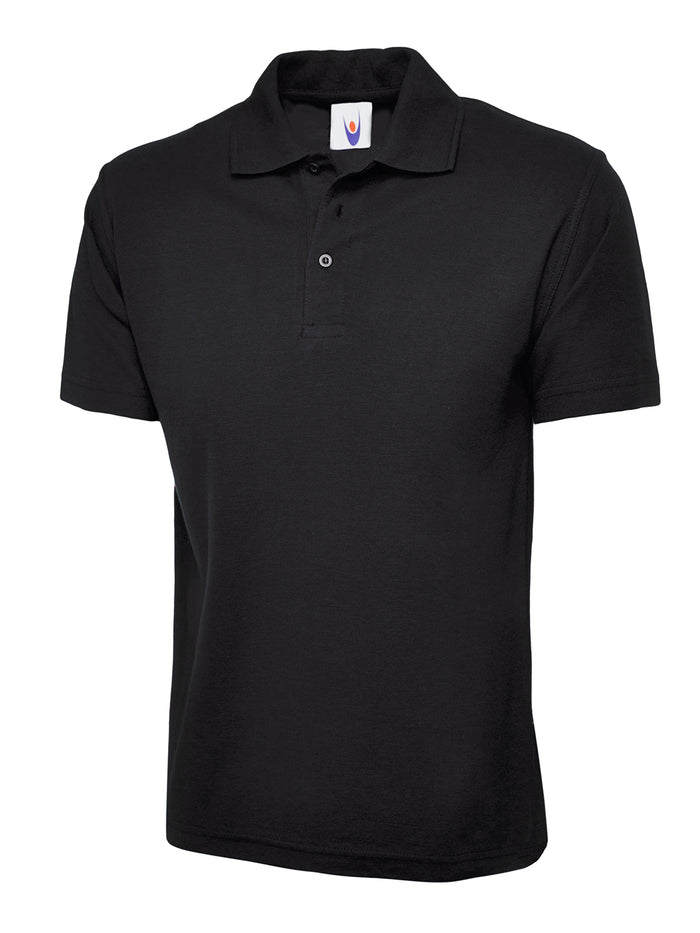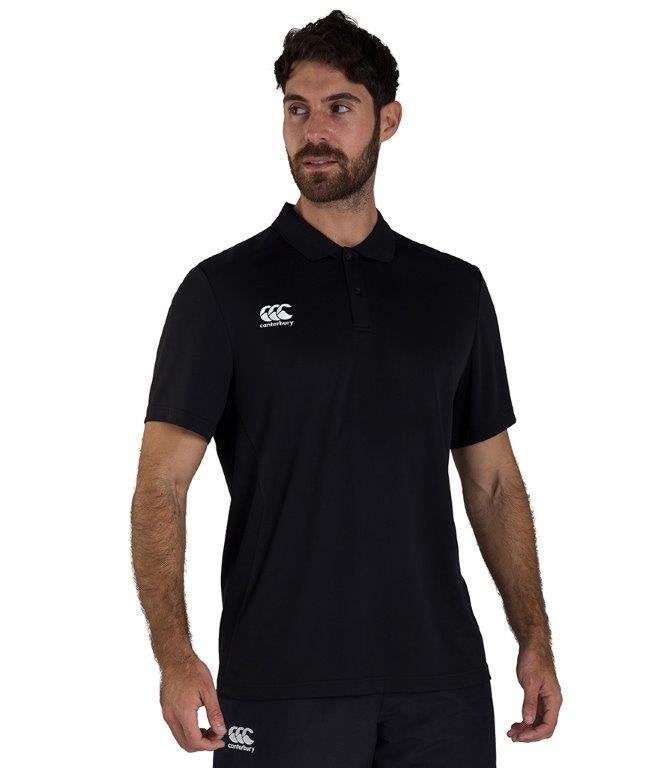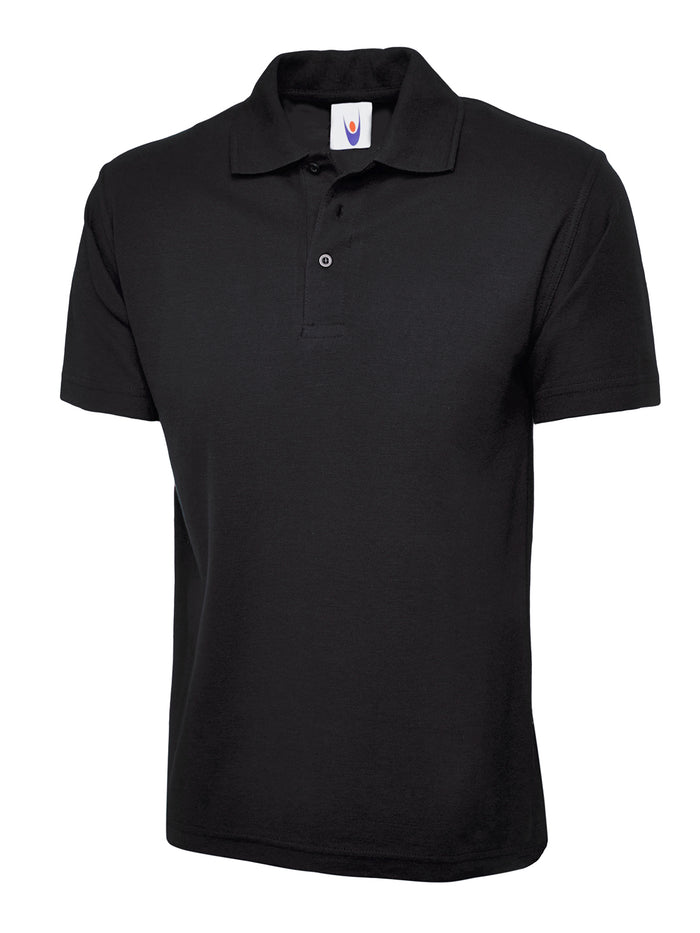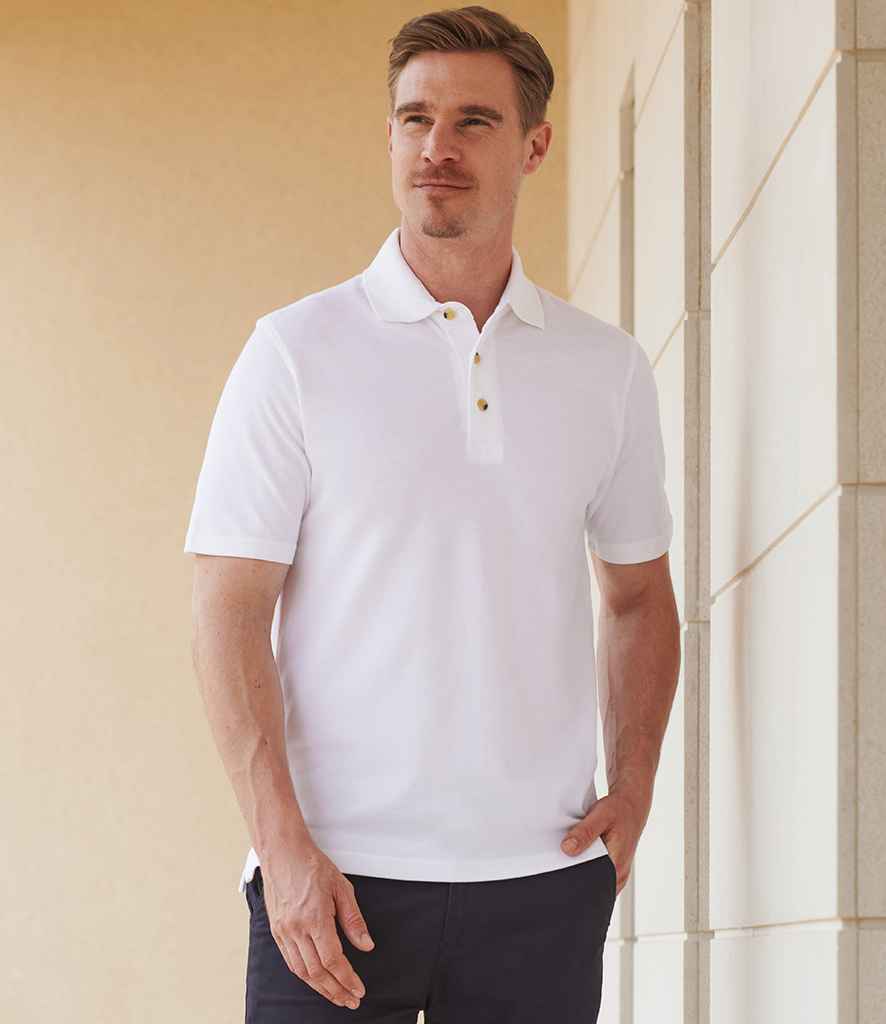
The best polo shirt for embroidery is not automatically the most expensive polo. For a business uniform, the garment needs to support the logo cleanly, suit the job, fit the team and remain straightforward to reorder.
Start with fabric and construction
A stable polo fabric generally gives embroidery a better base than a very thin or highly stretchy garment. Piqué polos are a common business choice because the fabric has enough structure for everyday uniform use, but the exact garment should still be checked before branding.
Performance polos can be a better choice for active or warm environments. With lighter technical fabrics, the logo size, stitch density and stabilisation need more care, so do not choose the garment and decoration independently.
Fabric weight matters, but it is not a quality score
GSM means grams per square metre and describes fabric weight. A heavier polo can feel more substantial, while a lighter polo may be more comfortable for active teams. The right choice depends on the role, working temperature, laundering and desired appearance.
Check the logo area
Look at seams, plackets, pockets and panels before deciding where the logo will sit. A standard left-chest position works on many polos, but not every garment gives the same usable area. Very small lettering and detailed artwork may also need adjustment to reproduce clearly in thread.
Choose for the whole team
Before approving a polo, check the complete size range and whether suitable men's, women's or unisex options are available if your team needs them. A polo that looks good on one sample is not a good uniform choice if a significant part of the workforce cannot get an appropriate fit.
Think about colour availability
If the polo is becoming a core company garment, choose a colour and style that can support repeat orders. If several departments use different colours, check the required shades are available across the sizes and companion styles you need.
Plan for laundering
Use the manufacturer’s care instructions for the exact polo. Do not assume that a heavier garment can automatically be washed hotter, or that every polyester polo has the same care requirements.
Embroidery is only part of the decision
Some logos and garments are better suited to print, particularly where artwork is large or highly detailed. Our embroidery vs printing guide explains the main differences.
What should a business compare?
- Fabric composition and weight
- Fit and full size range
- Manufacturer wash instructions
- Colour availability
- Logo area and garment construction
- Suitability for the actual role
- Availability for future repeat orders
- Total garment and branding cost
Need help choosing polos for a team?
Browse Love My Uniform’s polo shirt range. For larger quantities, mixed teams or a current range you want to compare, request a business quote.