Planning embroidered healthcare uniforms
Embroidery can make a healthcare uniform programme look more consistent and professional, but the garment, logo position and ordering process need to work together. The best starting point is to decide which staff roles need branding, how the logo should appear and whether role names or individual names are required.
Choose the garment before the branding
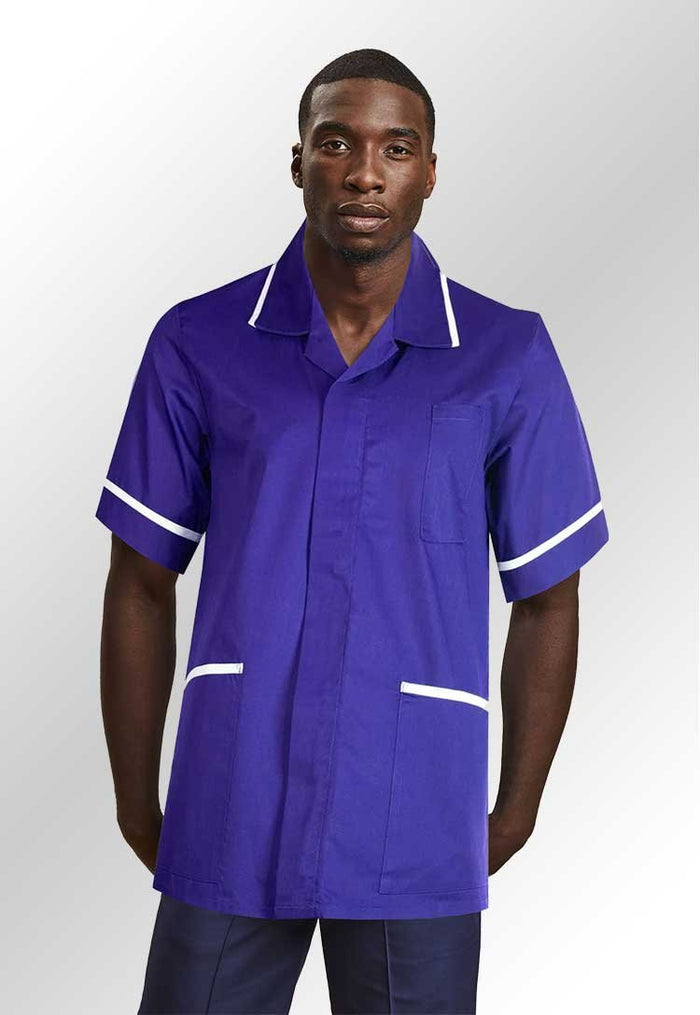
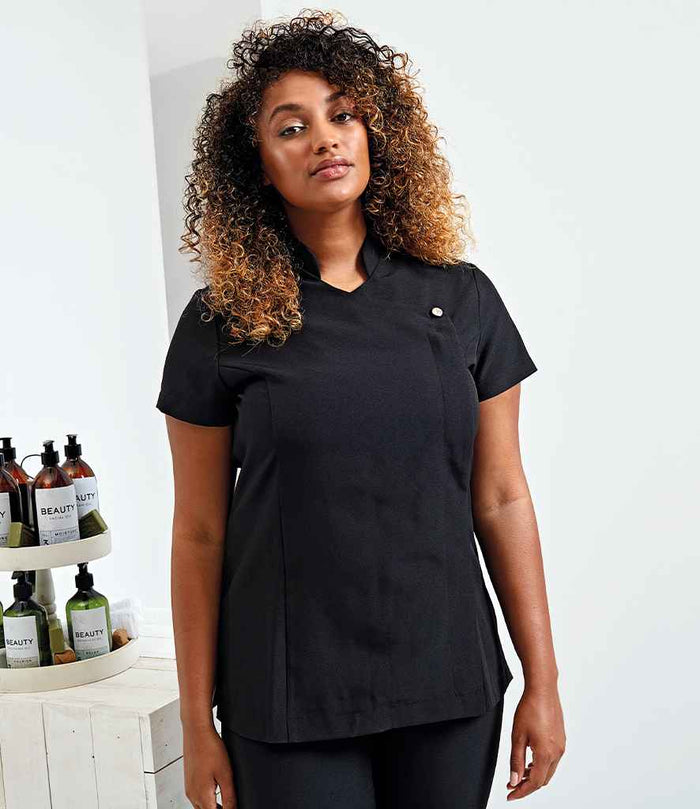
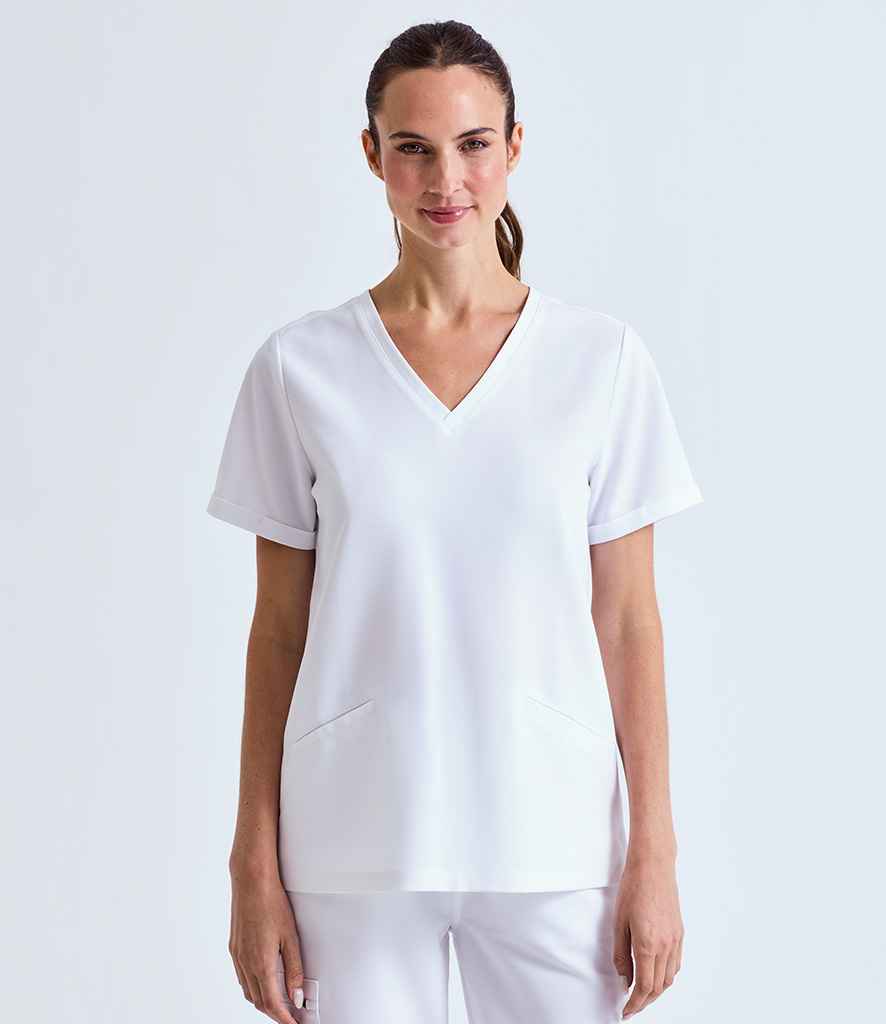
Start with garments that suit the work being carried out. Clinical teams may need scrubs or tunics, while reception, administration and management teams may be better served by polos, shirts, knitwear or other businesswear. A coordinated programme does not require every employee to wear the same garment; it requires the range to look intentional.
Keep logo placement consistent
For most uniform programmes, a consistent logo position across garment types makes reordering easier and reduces variation between departments. If staff names, job titles or departments are added, define a standard format before the first order.
Think about repeat orders
A uniform specification should be easy to reproduce six or twelve months later. Record the garment code, colour, size range, logo position, thread colours and any role-specific wording. This avoids rebuilding the specification every time somebody joins the team.
Changing supplier?
If you already use embroidered healthcare uniforms, you do not need to redesign the whole programme just because you are considering another supplier. Love My Uniform can review your current garment list and help match the existing range where possible. See our Uniform Switch Service or explore our healthcare uniform range.
Request a business quote
For team orders, request a business quote with your garment requirements, quantities and branding information. We can help structure the order around the roles in your organisation rather than treating every item as an isolated purchase.
Check the garment before approving the logo
Pockets, contrast panels, seams and zips can limit the available embroidery area. Review the exact product rather than applying one position automatically across tunics, scrub tops, polos and jackets. A consistent visual result may require slightly different technical placement on different garments.
Use a pre-production checklist
- Confirm the current logo artwork and thread colours.
- Approve the finished width, position and orientation.
- Check spelling for names, roles and departments.
- Confirm garment colours and sizes before embroidery.
- Keep the approved specification for repeat orders.
Protect consistency across locations
Multi-site healthcare organisations should use one approved artwork file and one written branding standard. Identify who can authorise changes and how new locations obtain the current specification. Where role colours differ, test the logo contrast on every approved shade.
Plan for reorders
Record the garment code and logo setup with the order. New-starter and replacement requests can then refer to an existing specification instead of rebuilding the decoration instructions each time. For larger or mixed-role orders, a structured quote helps review the full range together.
Check a branded sample as a complete garment
Review the logo from normal viewing distance, not only close up. Confirm that the backing, stitch density and placement do not affect comfort or pocket use. If names or role text are included, approve their font, capitalisation and order. Photograph the accepted sample and keep the image with the written specification.
When colours or garments change, repeat the check. The same thread combination can have very different contrast on a new fabric shade, and moving a logo to avoid a seam can change the overall appearance.