One organisation does not require one garment
Private clinics and aesthetics businesses often try to create consistency by putting every employee into the same uniform. That is simple, but it is not always the best answer. Clinical, treatment, reception and management roles can have very different practical requirements.
The stronger approach is to build a coordinated uniform system: different garments where the work demands it, held together by colour, branding and a controlled product list.
When scrubs may be appropriate
Scrubs provide a straightforward top-and-trouser format for active clinical or treatment roles. When comparing ranges, look beyond appearance. Consider fit, stretch, pocket configuration, fabric composition, size availability and the manufacturer's stated laundering instructions.
When tunics may be appropriate
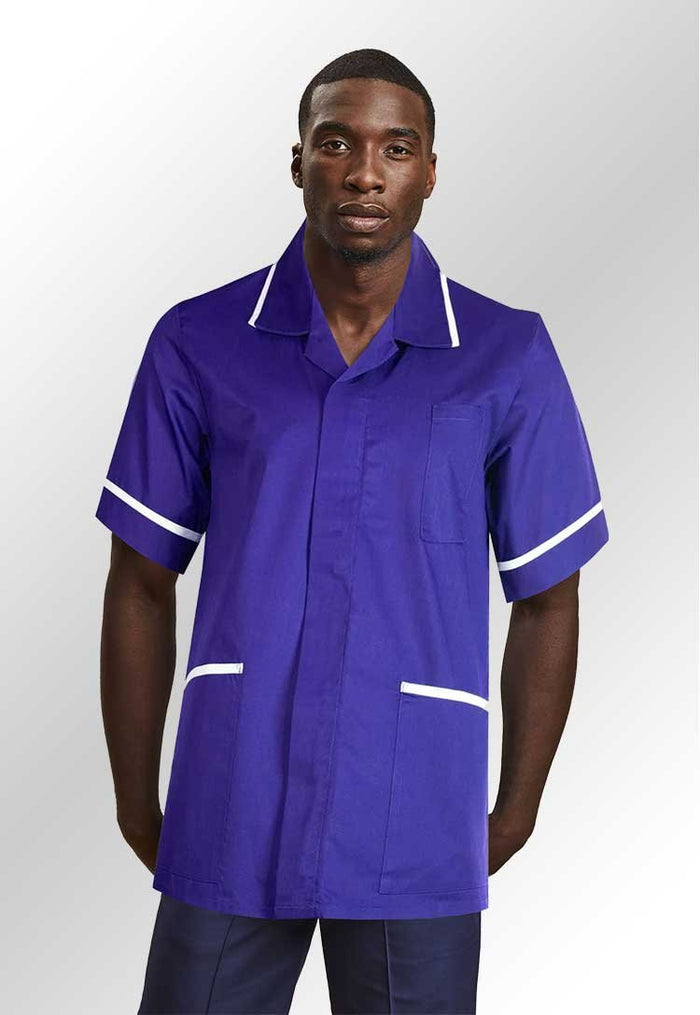
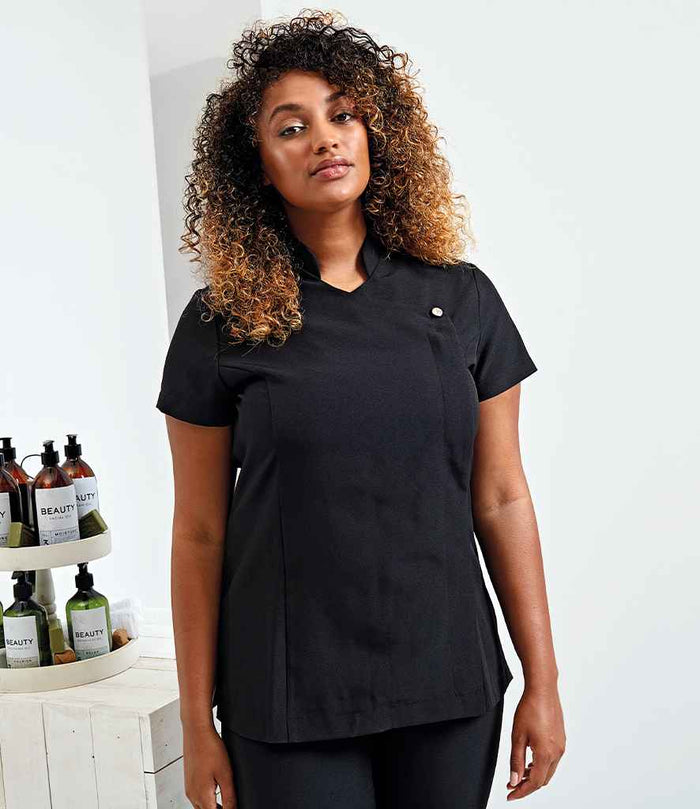
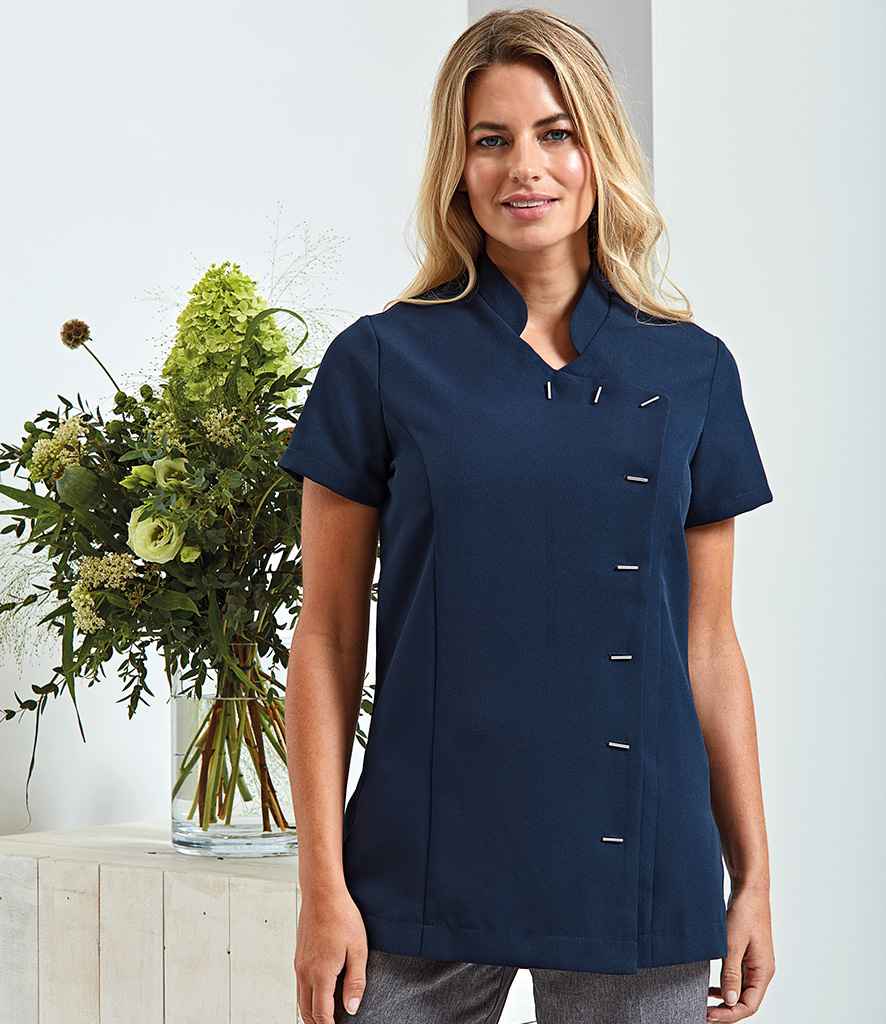
Tunics can provide a more structured appearance and are available in a range of healthcare and beauty-oriented designs. They may suit organisations looking for a defined treatment-uniform aesthetic rather than the looser visual language of traditional scrubs.
When front-of-house clothing is better
Reception and administrative staff rarely need clinical garment features. A blouse, shirt, polo, knitwear or other businesswear can look more appropriate for the role while still using the same logo and approved colour palette.
Use branding to connect the ranges
If multiple garment types are used, branding consistency becomes more important. Use the same approved logo artwork and set a clear embroidery or print position. Where garment construction forces a different position, document the approved alternative rather than deciding again with every order.
Build a restrained colour palette
Private healthcare and aesthetics brands often have strong visual identities. Use those colours carefully. A uniform does not always need to reproduce the exact brand colour in the fabric; neutral garments with a well-applied logo can sometimes create a cleaner result and are often easier to replenish.
Think about the client journey
Consider what a client sees from entry to treatment. Reception may need a polished front-of-house appearance, treatment staff may need more practical garments, and managers may move between both environments. The uniform should support that journey rather than simply looking good in a product photograph.
Plan for growth
Record approved style codes, colours, logo positions and role assignments. This becomes increasingly important as a clinic adds employees or locations. A uniform range that exists only in one manager's memory will eventually become inconsistent.
Test before standardising
For a new garment family, order samples in representative sizes and review comfort, movement and fit with wearers. Confirm care instructions before rollout. This is particularly important when moving from a traditional tunic to stretch scrubs, or vice versa.
Do not make a supplier change harder than necessary
If you already have a uniform style that supports your brand, changing supplier does not automatically require a redesign. Existing garment codes, colours and photographs can be used to identify potential matches and alternatives.
Build the range around your roles
Love My Uniform can help private healthcare and aesthetics teams structure a business quote across clinical and front-of-house requirements.
Private healthcare uniforms · Aesthetics and beauty clinic uniforms · Request a business quote.